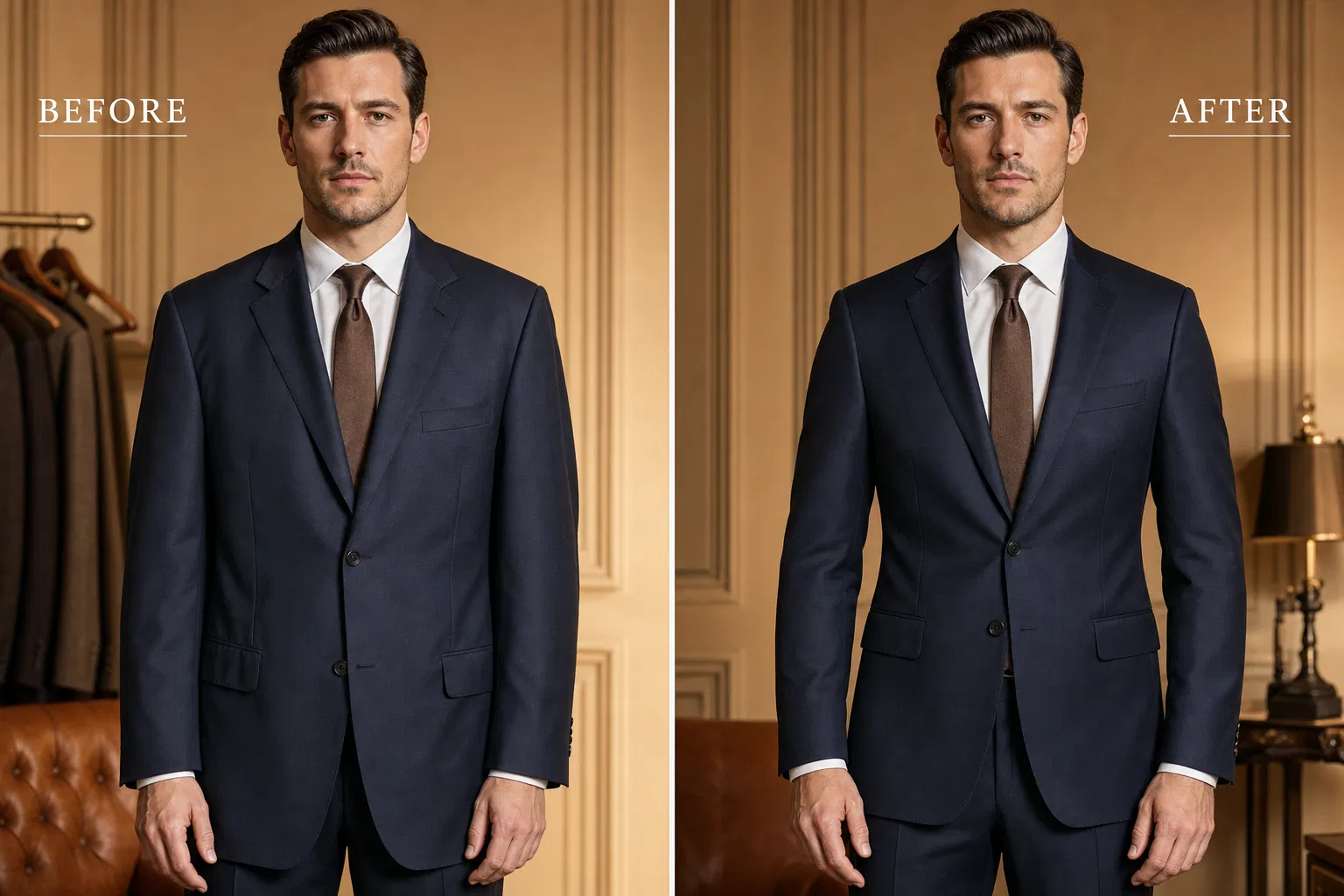
Not every ill-fitting garment needs to be replaced. Here is how to decide when alterations make sense — and when they do not.
The Case for Alterations
Ready-to-wear clothing is designed to fit a statistical average — not any individual person. The reality is that most people fall outside that average in at least some dimension. Shoulders may be broad but the waist narrow. Legs may be short but the hips wide. This is not a problem with your body; it is a limitation of mass-produced clothing.
A skilled tailor or seamstress can bridge this gap. Alterations can transform a garment that fits poorly into one that fits as though it were made for you. And a well-fitting garment looks dramatically better than an expensive garment that does not fit.
Alterations That Are Almost Always Worth It
Hemming pants and skirts. This is the most common and cost-effective alteration. A proper hem takes thirty minutes and costs between fifteen and forty dollars. It makes an enormous difference in how a garment looks and how it fits your proportions.
Taking in or letting out a waist. Most pants and skirts have enough seam allowance to be taken in or let out by one to two inches. This is a straightforward alteration that can save a garment that fits well everywhere except the waist.
Tapering a jacket or shirt. A jacket or dress shirt that fits well in the shoulders but is too boxy in the body can be tapered at the side seams. This is one of the most impactful alterations for men's clothing.
Shortening sleeves. Sleeve length is one of the most common fit issues, particularly for shorter individuals. Shortening sleeves on a jacket or dress shirt is a relatively simple alteration.
Replacing a zipper. A broken zipper does not mean a garment is ruined. A new zipper can be installed for a fraction of the cost of replacement.
Alterations That Require Careful Consideration
Resizing a shoulder. Moving a shoulder seam is one of the most complex and expensive alterations. It requires rebuilding much of the upper garment. It is worth considering only for high-quality garments where the investment is justified.
Significant size changes. Taking a garment in or letting it out by more than two sizes is usually not practical. The proportions of the garment — pocket placement, lapel width, seam lines — are designed for a specific size, and significant resizing can look off even when done skillfully.
Structural repairs on heavily worn garments. If a garment is significantly worn — thinning fabric, multiple failing seams, fading — extensive repairs may not be cost-effective. A good tailor will be honest with you about whether a repair makes sense.
When to Replace Instead
There are situations where replacement is the better choice:
- The garment has significant structural damage (large tears, severe fabric degradation)
- The alteration cost would exceed the replacement cost of a similar garment
- The garment's proportions are fundamentally wrong for your body type and cannot be corrected
- The fabric has faded, pilled, or worn to the point where repairs would be obvious
How to Find a Good Tailor
The quality of an alteration depends almost entirely on the skill of the person doing it. A good tailor will assess your garment honestly, tell you what is and is not possible, and give you a clear price before beginning work. They will fit you in the garment before making any cuts, and they will press the finished work before returning it to you.
Ask to see examples of their work. Look at the evenness of their stitching, the quality of their pressing, and how well their previous alterations have held up. Word of mouth is still the best way to find a skilled tailor — and that is exactly what icantsew.com is here to help you with.
Looking for a trusted professional?
Browse our directory of seamstresses, tailors, and alterations specialists across the Houston metro area.
Find a Professional