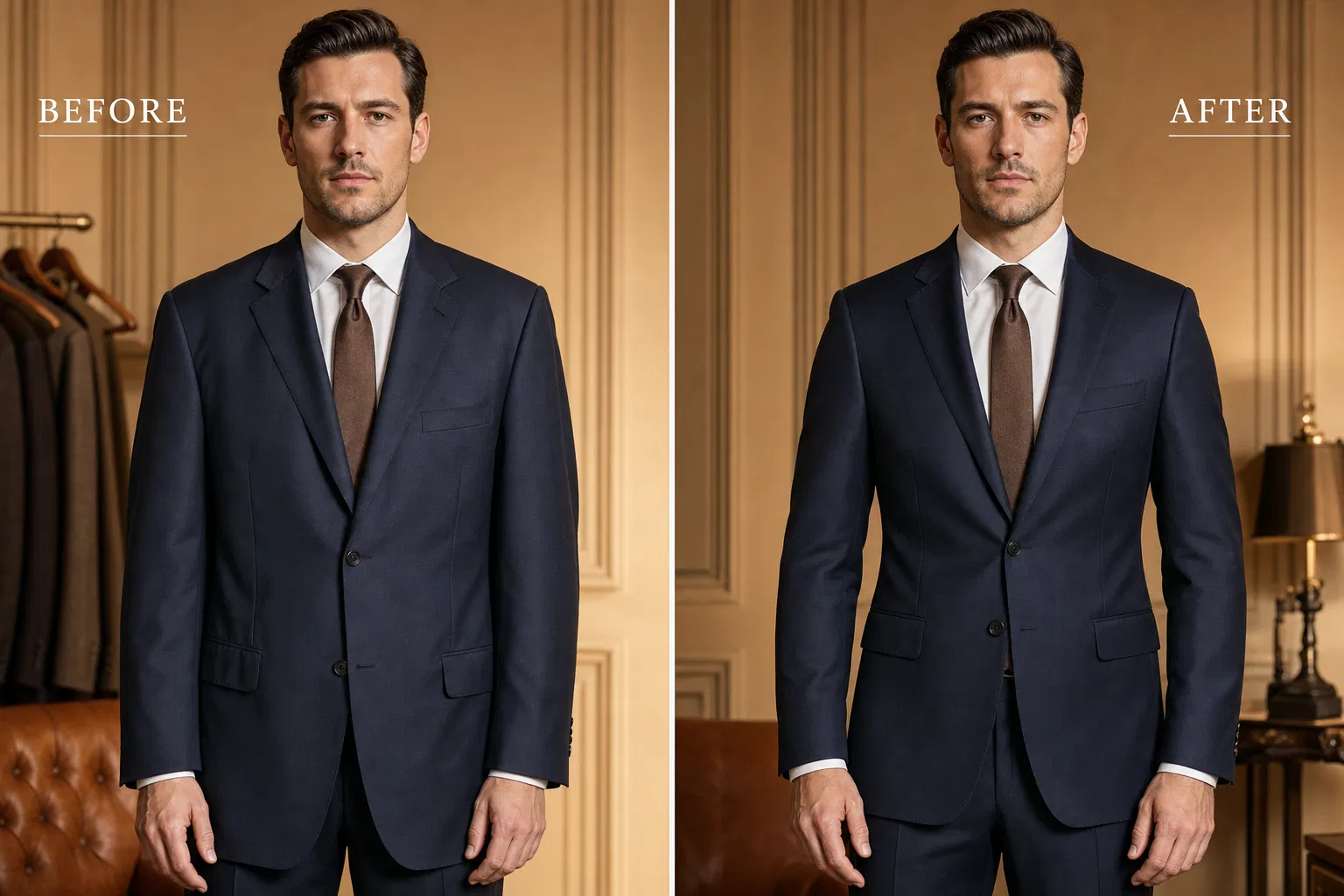
A suit that fits correctly is transformative. Here is what good fit looks like and what a tailor can — and cannot — do.
Why Fit Is Everything
A $300 suit that fits perfectly will look better than a $3,000 suit that does not. This is not an exaggeration — fit is the single most important factor in how a suit looks. And because suits are sold in standard sizes that cannot accommodate the enormous variation in human body shapes, almost every suit benefits from at least some alteration.
Understanding what good fit looks like helps you buy smarter and communicate more effectively with your tailor.
The Shoulder: The Foundation of Fit
The shoulder is the most important fit point on a jacket, and it is also the most difficult and expensive to alter. When buying a suit off the rack, always prioritize shoulder fit above everything else.
A well-fitting shoulder seam sits exactly at the edge of your shoulder — not hanging off the edge, and not pulled up toward your neck. The sleeve should fall straight from the shoulder without pulling or bunching. There should be no divots or ripples at the shoulder point.
If the shoulders fit, almost everything else can be altered. If they do not, the alterations required to correct them are extensive and expensive.
The Chest and Waist: Where Tailoring Shines
The chest should be snug but not tight. When you button the jacket, the lapels should lie flat against your chest without pulling open. There should be no "X" of tension at the button.
The waist is where most off-the-rack suits fail. Ready-to-wear suits are cut with a boxy silhouette to accommodate a range of body types. A tailor can take in the side seams to create a more defined waist, dramatically improving the suit's silhouette. This is one of the most impactful and cost-effective alterations available.
The Sleeve: Length and Fit
Sleeve length is a matter of convention and proportion. The traditional rule is that approximately half an inch of shirt cuff should show below the jacket sleeve. Most off-the-rack suits are cut long to accommodate taller wearers, so shortening sleeves is one of the most common alterations.
Shortening a jacket sleeve from the cuff is straightforward. Shortening from the shoulder (to correct a sleeve that is too long at the top) is more complex and expensive.
The Trouser: Multiple Points of Fit
Trousers have several fit points: the waist, the seat, the thighs, and the hem. The waist should sit comfortably without a belt pulling it in. The seat should be smooth without pulling across the hips or sagging below the buttocks. The thighs should have enough room for comfortable movement without excess fabric.
Trouser hemming is the most common alteration. The hem should break slightly on the front of the shoe — the exact amount depends on the trouser style and personal preference.
What a Tailor Can and Cannot Do
Easy alterations: Hemming trousers, shortening jacket sleeves from the cuff, taking in the waist and side seams, adjusting the seat of trousers, moving buttons.
Moderate alterations: Tapering trouser legs, shortening jacket length, adjusting the collar gap, taking in the chest.
Complex alterations: Moving shoulder seams, significant size changes (more than two sizes), restructuring the chest canvas.
Generally not worth attempting: Lengthening a jacket that has been cut short, adding significant width to a suit that is too small, correcting fundamental proportion issues.
A good tailor will be honest about what is and is not achievable with your specific garment. When in doubt, get a second opinion before committing to expensive alterations on a suit that may not be worth the investment.
Looking for a trusted professional?
Browse our directory of seamstresses, tailors, and alterations specialists across the Houston metro area.
Find a Professional