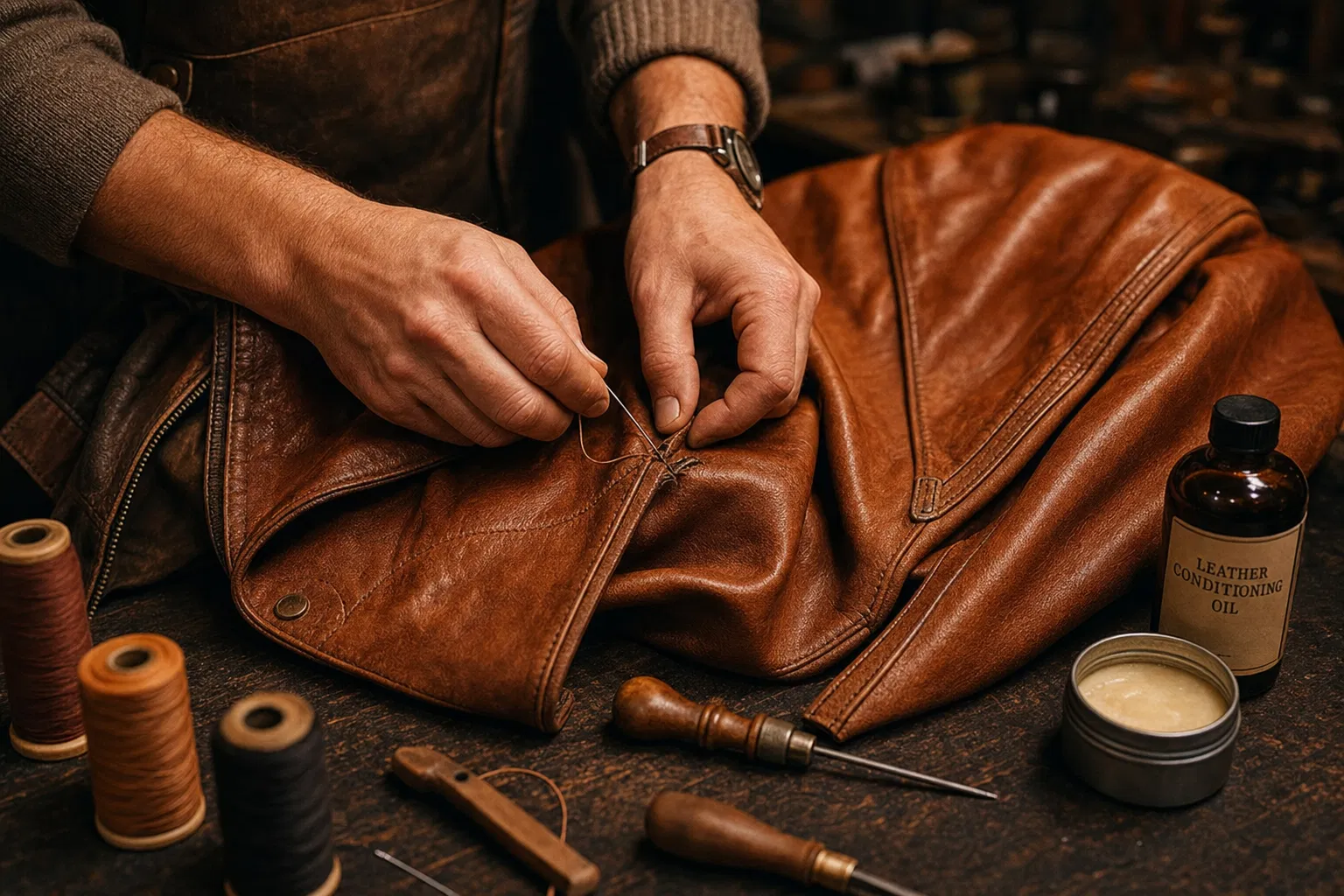
Leather goods are among the most durable items you can own — if you care for them properly. Here is how.
Why Leather Needs Regular Care
Leather is a natural material — it is essentially preserved animal hide. Like skin, it contains oils that keep it supple and prevent cracking. Over time, those oils evaporate, especially with exposure to heat, sunlight, and dry air. When leather dries out, it becomes stiff, begins to crack, and eventually deteriorates.
Regular conditioning replaces those lost oils and keeps leather supple, strong, and looking its best. This is not complicated or time-consuming — a leather jacket or bag needs conditioning perhaps two to four times per year, depending on how much it is used and the climate.
Basic Leather Care Routine
Clean before conditioning. Use a soft, slightly damp cloth to remove surface dirt and dust. For more thorough cleaning, use a leather cleaner specifically formulated for the type of leather you have (smooth leather, suede, and nubuck all require different products). Allow the leather to dry completely before conditioning.
Condition regularly. Apply a small amount of leather conditioner to a soft cloth and work it into the leather in circular motions. Allow it to absorb for fifteen to thirty minutes, then buff off any excess with a clean cloth. The leather should feel supple and look slightly enriched in color.
Protect from water. Water can stain leather and, if it soaks in, cause it to stiffen as it dries. A leather protector spray creates a barrier against moisture. Apply it to clean, conditioned leather and reapply periodically.
Store properly. Store leather goods in a cool, dry place away from direct sunlight and heat sources. Stuff bags and shoes with tissue paper to help them maintain their shape. Use a breathable dust bag rather than plastic, which traps moisture.
Common Leather Problems and Solutions
Scratches. Minor surface scratches can often be buffed out with a soft cloth. Deeper scratches may respond to leather conditioner, which can help blend the scratch into the surrounding leather. For significant scratches, a leather repair specialist can apply a color-matched filler.
Dryness and cracking. If leather has become dry and is beginning to crack, aggressive conditioning can sometimes reverse early-stage drying. Deep cracks, however, are difficult to repair completely. Prevention is far more effective than treatment.
Stains. Act quickly — the longer a stain sits, the harder it is to remove. Blot (do not rub) liquid stains immediately. For oil-based stains, sprinkle cornstarch or talcum powder on the stain, allow it to sit overnight to absorb the oil, then brush off gently. For stubborn stains, consult a leather care professional.
Fading. Leather color fades with sun exposure and age. A leather dye or color restorer can refresh faded leather, but color matching requires skill. For valuable pieces, a professional leather restoration service will achieve better results than a DIY approach.
When to See a Professional
Some leather repairs are beyond the scope of home care:
- Significant tears or cuts in the leather
- Delamination (where the leather surface separates from the backing)
- Extensive color fading or discoloration
- Structural repairs to leather jackets, bags, or shoes
- Cleaning and conditioning of exotic leathers (crocodile, ostrich, snake)
The Houston metro area has several leather care specialists listed in icantsew.com, including Total Leather Care and Refeci Luxury Care, who specialize in exactly these kinds of repairs and restoration.
Looking for a trusted professional?
Browse our directory of seamstresses, tailors, and alterations specialists across the Houston metro area.
Find a Professional