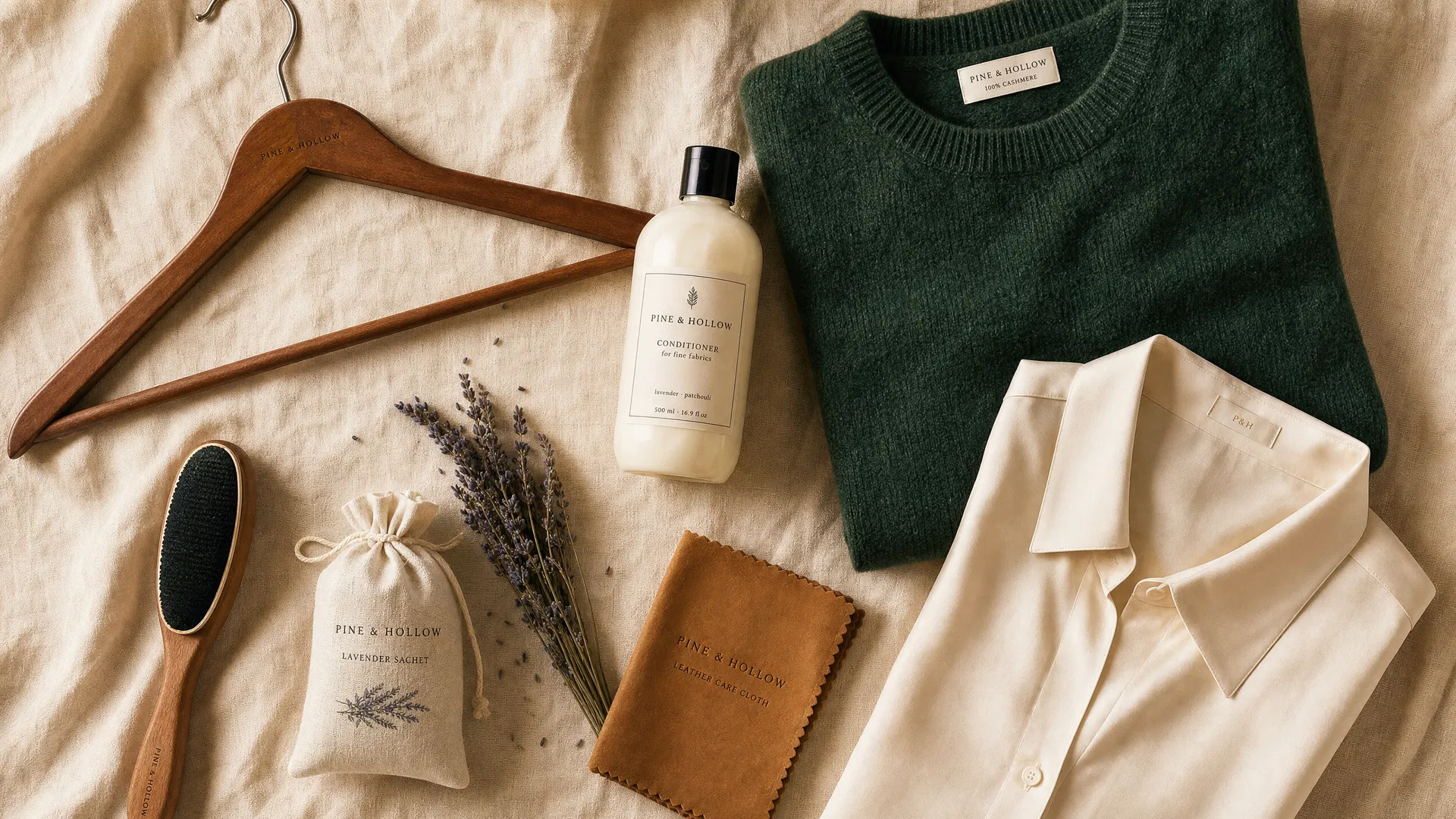
A practical guide to fabric care, proper storage, and the habits that separate a lasting wardrobe from a disposable one.
The Foundation: Read the Label
Every garment tells you exactly how it wants to be treated — you just have to read the label. Those small care symbols sewn into the seam are not suggestions; they are the manufacturer's instructions based on the fabric's actual fiber content and construction. Before you wash anything for the first time, take thirty seconds to read the label.
The most common mistake people make is washing everything the same way. A merino wool sweater and a cotton t-shirt may look similar, but they have entirely different needs. Wool felts and shrinks in hot water. Cotton can handle heat but may fade with harsh detergents. Silk requires cold water and gentle handling. Linen wrinkles easily but is actually quite durable.
Washing: Less Is More
Modern clothing is washed far more frequently than it needs to be. Unless a garment is visibly soiled or has absorbed sweat, most items can be worn two to three times before washing. Over-washing breaks down fibers, fades color, and weakens seams faster than almost any other factor.
When you do wash, follow these principles:
Turn garments inside out. This protects the outer surface — the part you see — from friction against other clothes and the drum of the washing machine. It also helps preserve printed graphics and embroidery.
Use cold water whenever possible. Cold water is gentler on fibers, prevents shrinkage, and uses less energy. The vast majority of everyday washing can be done effectively in cold water with a quality detergent.
Use less detergent than you think you need. Most people use two to three times more detergent than necessary. Excess detergent leaves residue in fibers that attracts dirt and dulls fabric over time. Follow the measuring guidelines on the bottle, and when in doubt, use less.
Wash delicates in a mesh laundry bag. This prevents snags, stretching, and tangling. It is especially important for lingerie, knitwear, and anything with embellishments.
Drying: The Most Damaging Step
The dryer is where most clothing damage actually occurs. High heat breaks down elastic fibers, causes shrinkage, weakens seams, and fades colors. If you want your clothes to last, reduce your dryer use significantly.
Air dry whenever possible. Lay knits flat to dry to prevent stretching. Hang woven garments on padded hangers. Keep everything out of direct sunlight, which fades color.
Use the lowest heat setting. If you must use a dryer, use the lowest heat setting appropriate for the fabric. Remove items while still slightly damp and allow them to finish drying on a hanger or flat surface.
Never put leather, suede, wool, or silk in the dryer. These materials require specialized care. Leather and suede should be cleaned by a professional. Wool and silk should be hand-washed or dry-cleaned.
Storage: The Overlooked Factor
How you store your clothes when you are not wearing them has an enormous impact on how long they last.
Fold knitwear, never hang it. Hanging sweaters and knits causes them to stretch and lose their shape over time. Fold them and store them on a shelf or in a drawer.
Use quality hangers. Wire hangers distort the shoulders of garments over time. Invest in wooden or velvet-covered hangers for jackets, dress shirts, and blouses. Cedar hangers have the added benefit of repelling moths.
Give clothes room to breathe. An overcrowded closet causes garments to wrinkle, and the friction between items can cause pilling and wear. If your closet is packed, it is time to edit.
Store seasonal items properly. Before storing winter or summer clothes, wash them first — even if they seem clean. Body oils and invisible stains can set and attract insects over time. Store in breathable cotton garment bags, not plastic, which traps moisture.
When to See a Professional
Some garment care tasks are best left to professionals. A skilled seamstress or tailor can address issues that home care cannot:
- **Loose buttons and failing seams** should be repaired before they become larger problems
- **Hems that have dropped** can be quickly and inexpensively re-stitched
- **Stains that have set** may respond to professional dry-cleaning solvents
- **Leather and suede** require specialized conditioning and cleaning
- **Vintage or heirloom pieces** deserve the attention of an expert
The cost of a minor repair is almost always a fraction of the cost of replacing a garment. Building a relationship with a trusted local tailor or seamstress is one of the most practical investments you can make in your wardrobe.
Looking for a trusted professional?
Browse our directory of seamstresses, tailors, and alterations specialists across the Houston metro area.
Find a Professional