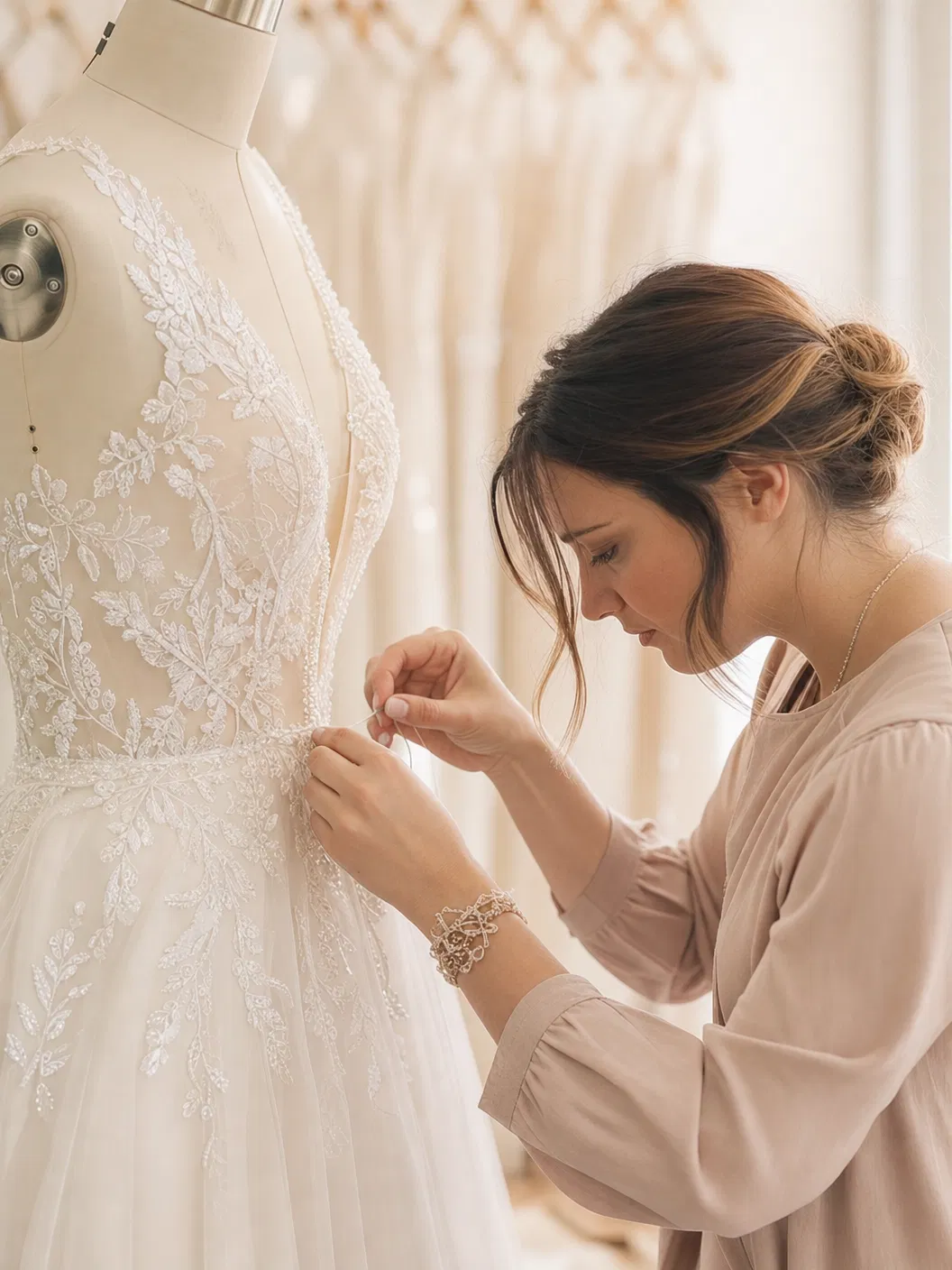
Wedding dress alterations are not optional — they are essential. Here is everything you need to know to navigate the process.
Why Every Wedding Dress Needs Alterations
Wedding dresses are sold in standard sizes that are designed to fit a range of body types — not your specific body. Even a dress that fits well off the rack will almost certainly need at least a hem and some fitting adjustments. More often, brides require significant work: taking in the bodice, adjusting the straps, adding or altering a bustle, and hemming to the exact height of their wedding shoes.
Bridal alterations are not a sign that something is wrong with the dress or with you. They are a standard, expected part of the wedding dress process. Budget for them from the beginning.
When to Start the Alteration Process
The timing of bridal alterations is critical. Start too early and your body may change before the wedding; start too late and you risk running out of time for fittings and adjustments.
The general guideline is to begin alterations four to six months before the wedding for complex gowns, or two to three months for simpler styles. Your first fitting should happen when your body is relatively stable — after any significant weight loss or gain you are planning, and after you have purchased your wedding shoes (the heel height affects the hem length).
Plan for two to four fittings for most gowns. Complex dresses with extensive beading, multiple layers, or significant structural work may require more.
What Bridal Alterations Typically Include
Hemming is almost always required. The hem must be cut and finished to the exact height of your wedding shoes. For gowns with multiple layers, lining, and a train, this is a significant undertaking.
Bodice fitting involves taking in or letting out the sides and back of the dress to fit your torso precisely. This may include adjusting boning, restructuring the cups, or altering the back closure.
Strap and neckline adjustments are common for strapless gowns and those with spaghetti straps. The neckline must sit securely without requiring constant adjustment.
Bustle installation is required for gowns with a train that you want to lift for dancing and movement at the reception. There are several bustle styles — American, French, and ballroom — and your seamstress can advise on which works best for your gown's construction.
Zipper and closure adjustments ensure the back of the dress closes smoothly and stays closed throughout the day.
How Much to Budget
Bridal alterations are a significant expense that many brides underestimate. A realistic budget for a moderately complex gown is $300–$600. Heavily beaded gowns, dresses with multiple layers, or gowns requiring significant structural changes can run $600–$1,200 or more.
Get a quote before committing to a seamstress, and make sure the quote includes all anticipated fittings, not just the first appointment.
Finding the Right Bridal Seamstress
Not every tailor or seamstress has experience with bridal work. Wedding gowns involve specialized construction — boning, structured bodices, delicate lace, heavy beading — that requires specific skills. Ask to see examples of bridal work specifically, not just general alterations.
Bridal boutiques often have in-house seamstresses or preferred referrals. Independent seamstresses who specialize in bridal work can be equally skilled and sometimes more affordable. icantsew.com lists bridal alteration specialists across the Houston metro area and beyond — filter by "Bridal Alterations" to find specialists in your city.
What to Bring to Your First Fitting
Bring your wedding shoes — the exact pair you will wear on the day, with the heel height you will wear. Bring any undergarments you plan to wear. If you are planning a specific hairstyle, consider how it will affect the neckline. The more accurately you can replicate your wedding day appearance, the more precise the alterations will be.
A Final Word on Timing
Do not wait. The most common bridal alteration mistake is starting too late. Skilled bridal seamstresses book up months in advance, especially in peak wedding season (spring and fall). The moment you purchase your dress, begin researching seamstresses and scheduling your first consultation.
Looking for a trusted professional?
Browse our directory of seamstresses, tailors, and alterations specialists across the Houston metro area.
Find a Professional