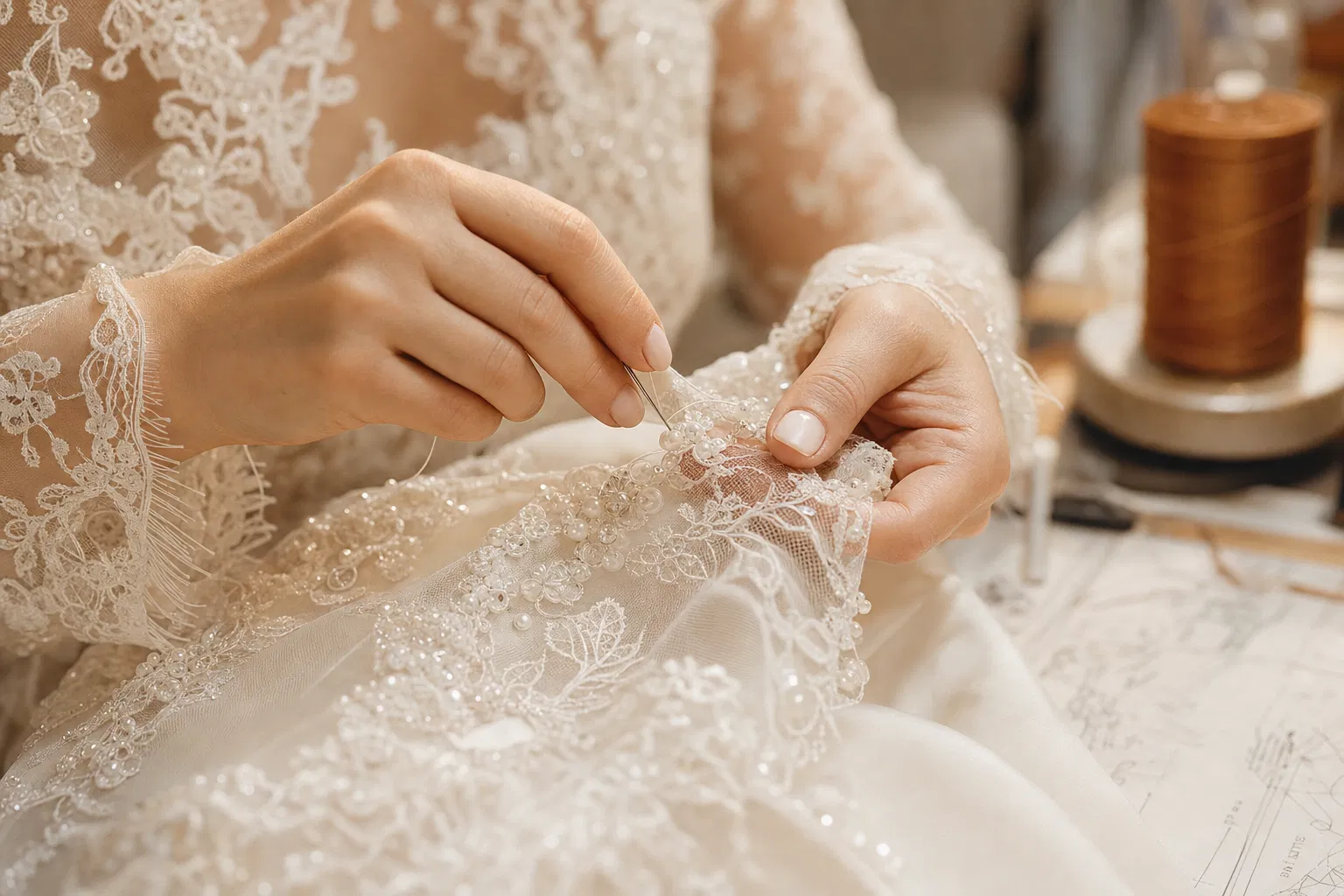
Everything you need to know about timing, what to expect, and how to find the right seamstress for your wedding dress.
Why Almost Every Wedding Dress Needs Alterations
Bridal gowns are sold in standard sizes that are designed to fit a range of body types. The reality is that almost no one's body matches a standard bridal size perfectly. Cups may be one size, the waist another, and the hips yet another. Brides are also typically measured and fitted months before the wedding, and bodies change.
The good news is that bridal alterations are a well-established part of the wedding process. A skilled bridal seamstress can take a dress that fits imperfectly off the rack and transform it into something that looks as though it was made specifically for you.
When to Start the Alteration Process
Order your dress early. Most bridal gowns take four to six months to arrive after ordering. If you are ordering from a bridal salon, factor this into your timeline.
Schedule your first fitting two to three months before the wedding. This gives enough time for multiple fittings and any unexpected complications. Do not wait until the last minute — skilled bridal seamstresses book up quickly, especially during peak wedding season (spring and fall).
Plan for two to four fittings. The first fitting assesses what needs to be done. Subsequent fittings check the progress and make final adjustments. The final fitting should happen one to two weeks before the wedding.
What Bridal Alterations Typically Involve
Taking in or letting out the bodice. This is the most common alteration. The bodice needs to fit snugly without restricting movement or breathing.
Hemming the skirt. Bridal gowns are typically sold long and need to be hemmed to the appropriate length for the bride's height and shoe height. Hemming a gown with a train or multiple layers is a significant undertaking that requires skill and time.
Bustle installation. If your gown has a train, you will likely need a bustle — a system of hooks and loops that lifts the train for dancing and movement at the reception. There are several styles of bustle; your seamstress can advise on what works best for your gown.
Strap and neckline adjustments. Straps that are too long cause the bodice to drop. Necklines may need to be adjusted for modesty or fit. These are typically straightforward alterations.
Adding or removing boning. The internal structure of a bodice can be adjusted to provide more or less support.
Preserving beadwork and lace. Alterations to heavily embellished gowns require particular skill. A good bridal seamstress will match any beading or lace that is disturbed by alterations.
What to Bring to Your Fittings
- The shoes you will wear on your wedding day (or shoes of the same heel height)
- The undergarments you plan to wear, including any shapewear
- Any accessories that will affect the fit, such as a belt or sash
Finding the Right Bridal Seamstress
Not every tailor or seamstress has experience with bridal gowns. Bridal alterations require specific skills — working with delicate fabrics, preserving embellishments, constructing bustles, and understanding the structure of formal gowns.
Ask to see examples of previous bridal work. Look for clean, even stitching, well-matched lace and beading, and evidence of careful pressing. Ask about their experience with your specific type of gown — a heavily beaded ballgown requires different skills than a simple silk sheath.
icantsew.com includes seamstresses and tailors who specialize in bridal alterations throughout the Houston metro area. Each listing notes the services offered, so you can find specialists with the specific experience your gown requires.
Looking for a trusted professional?
Browse our directory of seamstresses, tailors, and alterations specialists across the Houston metro area.
Find a Professional